


Looking after and upgrading
Many pools in Australia are finished with Marblesheen (Marbelite), especially those constructed in the 1970’s to 1990’s. It has since been overtaken by other trowel on finishes like Quartzon.
Marblesheen is mainly a mix of white cement and crushed marble (chips about 1 – 3 mm size) plus some additives, that is troweled onto a concrete pool structure in thickness from 5 to 20 mm. The finish initially would have been smooth and white. The quality however varies as it is a hand applied finish, and the skill level of the installer will impact on its look and longevity.
Note: Some Marblesheen installed in the early 70’s may contain some asbestos. So be mindful of this aspect. Left alone and undisturbed, it’s usually not an issue. Any cutting etc needs to be in compliance with local regulations. More details are here.
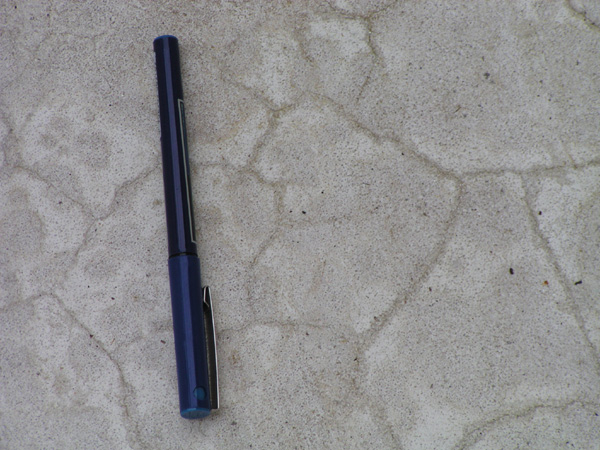
Over the years and depending on the quality of installation, pool water chemical balance and general wear and tear, it will slowly degrade. Usually, it ends up with random cracks, worn areas, black staining and maybe rust staining too. There can be large areas where the Marblesheen is soft and weak. (Pool acid literally eats into and weakens it) Some areas may be drummy (hollow underneath) or break away completely. There may be white calcium build ups as well.
Older pools often become hard to keep clean, with algae attacks common and particles of Marblesheen getting stuck in filters.
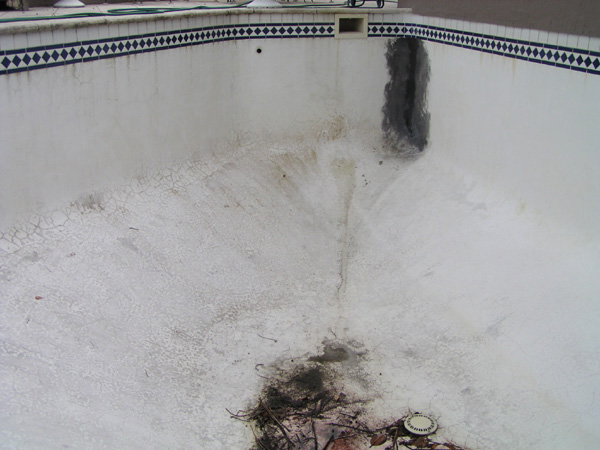
Because of the aged worn, porous and crumbly Marblesheen surface, they often demand high doses of chemicals to keep algae and staining under control. At some point you may decide the pool is taking too much time, money and management to keep it “clean”.
So what to do?
Such surfaces if still in reasonable condition after thorough inspection, clean and local repairs maybe resurfaced. The most usual options are a coating of some sort (Epoxy or better, Fluoropolymer). These finishes being non-reactive and non-absorbance will reduce the chemical demand significantly. Another option is to have installed a fibreglass shell, which provides a similar finish, though at a higher budget and potentially longer life. However, overtime fibreglass delamination may be an issue, which can be expensive to repair.
Of course, the Marblesheen may be too far gone and needs to be removed, and this can allow for a range of finishes, depending on the surface provided after the Marblesheen removal. It will likely be rough, so tiles are one (expensive option), or a trowel on finish, or a render and then a coating. The decision is largely driven by budget and the surface to work with.
Once done, the pool water management and chemical usage will be much easier and with less chemical dosage needed. And so less pool water balance issues, less chemical costs and more fun.
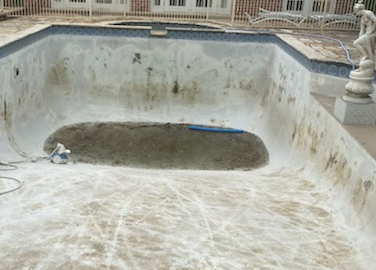
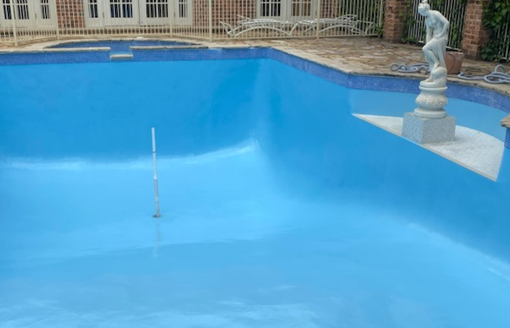
A Marblsheen pool, repairs and resurfaced
with a Fluoropolymer coating.

